Your wedding day will move quickly, but your photos should never feel rushed. A well-planned wedding photography timeline helps create room for the moments that matter most: getting ready with your closest people, an emotional first look, family portraits, quiet couple portraits, ceremony candids, reception details, and the joyful dance-floor energy at the end of the night.
As a Seattle wedding photographer, I always recommend building your timeline around three things: natural light, travel time, and the people who matter most. Seattle weddings often include changing weather, waterfront views, city traffic, ferry schedules, mountain backdrops, and venues with very different lighting conditions. The right timeline keeps everything flowing while giving your photographer the creative flexibility to make images that feel personal, polished, and full of life.
Why Your Wedding Photography Timeline Matters
A photography timeline is not just a schedule for your photographer. It is the foundation for a calm wedding day. When portraits, family photos, travel, and reception events are planned intentionally, you spend less time wondering what comes next and more time being present.
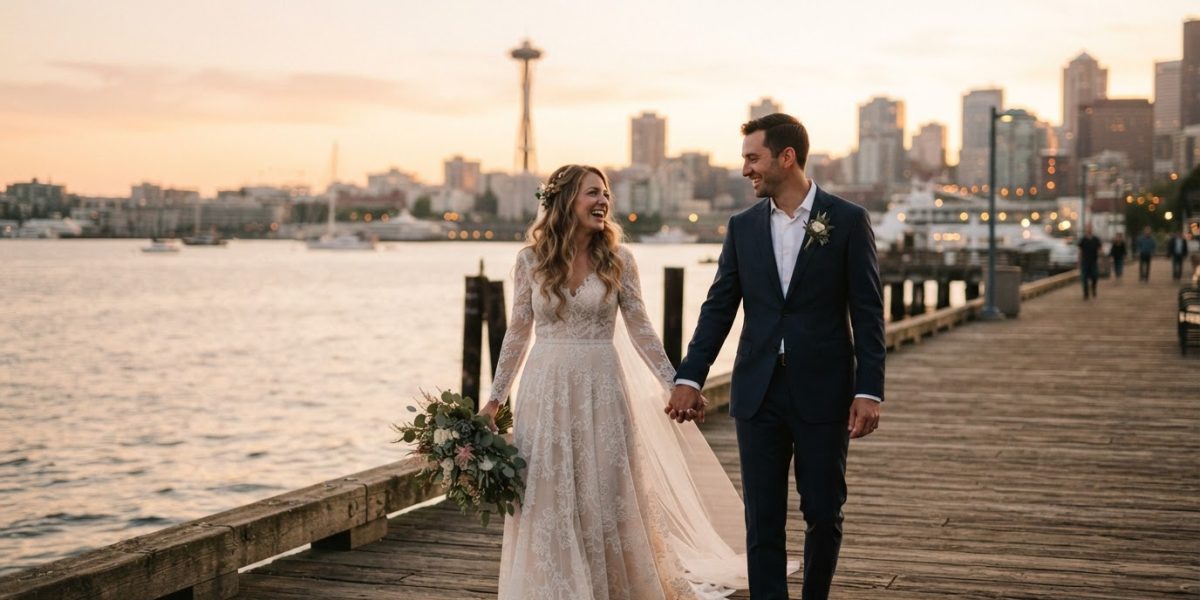
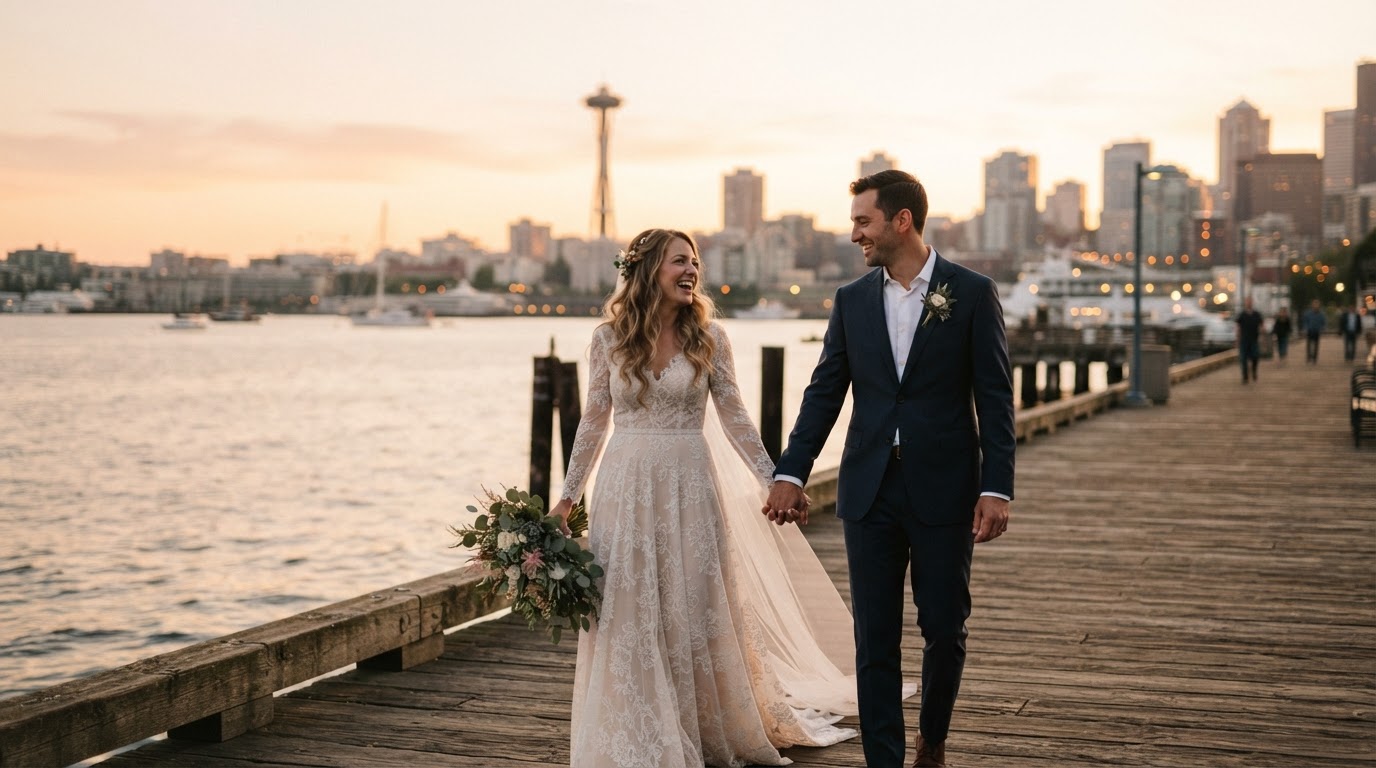
The best timelines leave space for real moments. That might be your parents seeing you fully dressed for the first time, a private vow exchange, a quick walk along the Seattle waterfront, or a few golden-hour portraits before sunset. These images happen naturally when the day has breathing room.
A Sample Full-Day Seattle Wedding Photography Timeline
Every wedding is different, but this sample timeline works well for many Seattle weddings with a first look, one ceremony location, and an evening reception. It can be adjusted for church ceremonies, multi-location events, cultural celebrations, ferry travel, or weddings with no first look.
12:00 PM — Details and Getting Ready Photos
Photography coverage often begins with details: rings, invitation suite, shoes, perfume, jewelry, florals, vow books, heirlooms, and any meaningful personal items. This is also when your photographer captures candid getting-ready moments with your wedding party and immediate family.
- Have all details gathered in one place before your photographer arrives.
- Choose a getting-ready room with window light whenever possible.
- Keep clutter in one corner or a separate room so the images feel clean and intentional.
1:15 PM — Final Getting Ready Moments
This is the time for the dress, veil, jacket, boutonniere, tie, cufflinks, and finishing touches. If you want emotional photos with parents or close friends, build in time for those interactions instead of squeezing them in at the last minute.
2:00 PM — First Look
A first look gives you a private moment together before the ceremony and opens up the timeline for portraits earlier in the day. For Seattle weddings, this can be especially helpful when sunset is early, rain is in the forecast, or your venue has limited portrait time after the ceremony.
2:20 PM — Couple Portraits
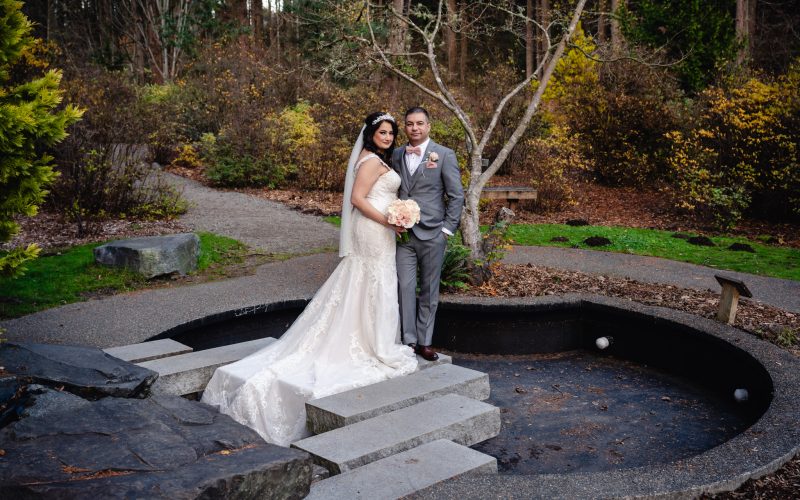
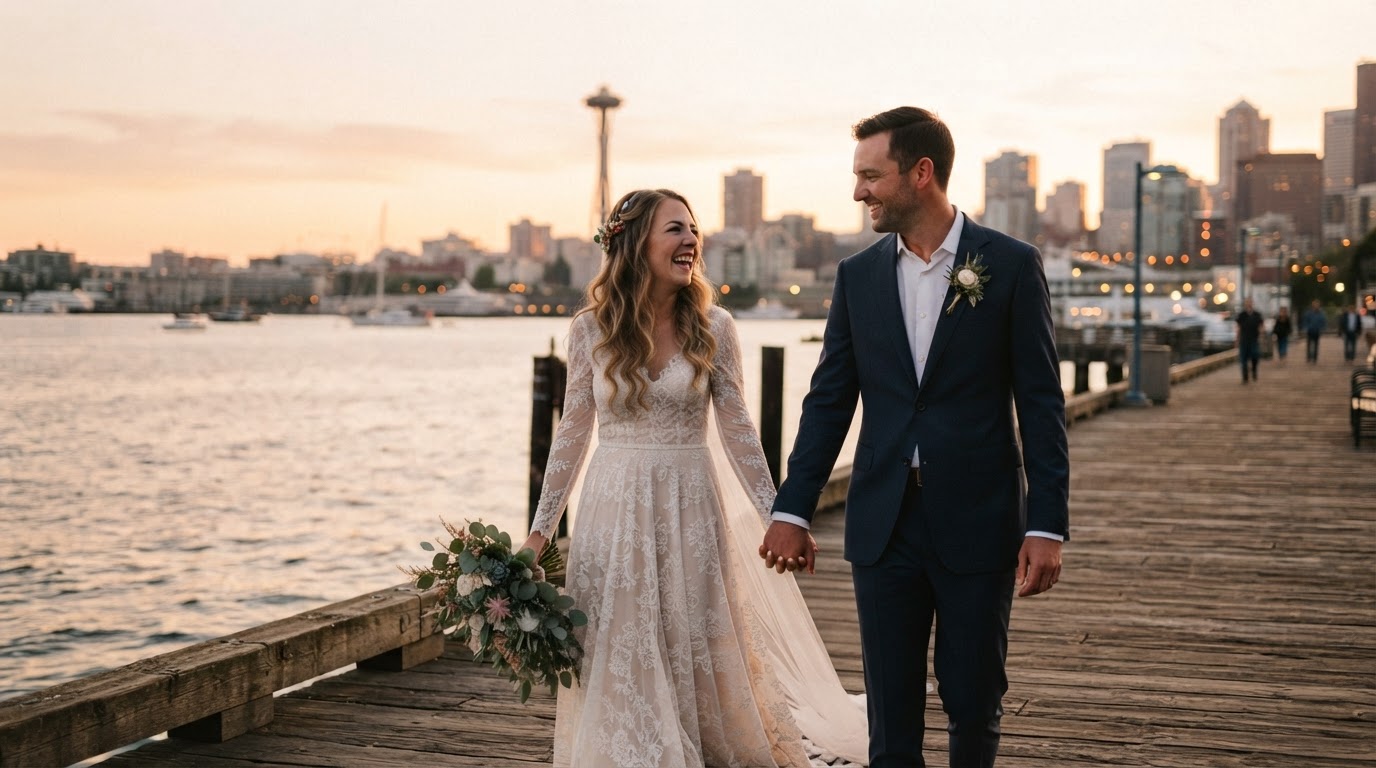
Plan at least 30–45 minutes for couple portraits. If you want multiple backdrops, such as a venue garden, rooftop, waterfront view, or city street, allow extra time for walking or transportation. Creative portraits benefit from space, direction, and a relaxed pace.
3:05 PM — Wedding Party Portraits
Wedding party photos usually take 20–30 minutes, depending on group size. A smaller group may need less time, while a large wedding party, mixed locations, or detailed editorial-style portraits may need more.
3:35 PM — Immediate Family Photos
Family portraits are one of the most important parts of the day, and they are easiest when planned in advance. Create a concise list of must-have groupings and share it with your photographer before the wedding. Assign one family member or wedding party member to help gather people quickly.
4:15 PM — Hide Away Before the Ceremony
Before guests arrive, take a break. This is a good time to freshen up, drink water, review vows, and enjoy a quiet moment. Your photographer can use this window to capture ceremony details, reception decor, candid guest arrivals, and venue atmosphere.
5:00 PM — Ceremony
Most ceremonies last 20–30 minutes, though religious or cultural ceremonies may be longer. Your photographer will document the processional, reactions, vows, ring exchange, first kiss, recessional, and the candid congratulations immediately afterward.
5:35 PM — Extended Family Photos and Cocktail Hour Candids
If you did immediate family photos before the ceremony, this post-ceremony window can be used for larger family groupings, relaxed guest candids, and cocktail hour coverage. Keeping the formal list focused helps you get back to the celebration sooner.
6:15 PM — Reception Details
Before guests enter the reception space, your photographer needs a few minutes to capture untouched tables, florals, cake, signage, place settings, and room design. These photos are especially meaningful after months of planning and vendor collaboration.
6:30 PM — Grand Entrance and Dinner
Once the reception begins, the timeline usually follows your planner or DJ schedule: entrance, dinner, toasts, cake cutting, first dances, parent dances, open dancing, bouquet toss, private last dance, or grand exit. Make sure your photographer knows which events are most important to you.
Sunset — Golden-Hour Portraits
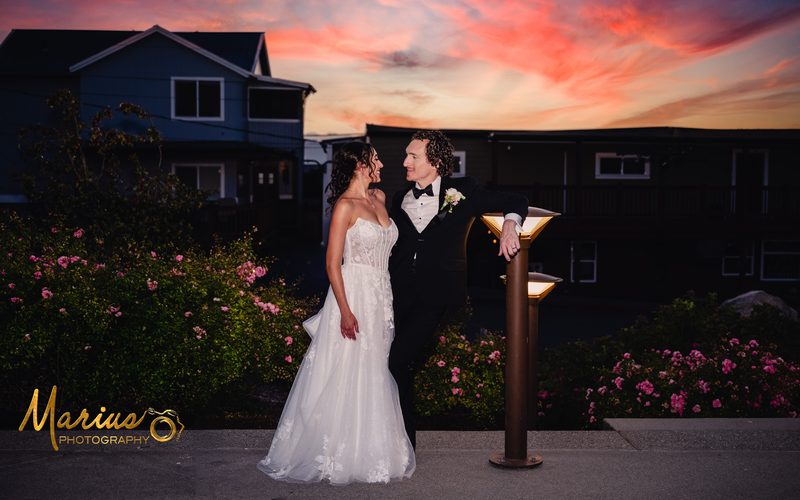
If the weather allows, step away for 10–15 minutes near sunset. This short portrait session often creates some of the most romantic images of the day. In Seattle, golden hour can change dramatically by season, so check sunset time when building your wedding day schedule.
Seattle-Specific Timeline Tips
- Plan for rain without fearing it. Clear umbrellas, covered portrait locations, and flexible timing can turn rainy weather into beautiful, romantic images.
- Build in travel buffers. Downtown Seattle, ferry routes, event traffic, and weekend parking can affect the schedule more than expected.
- Watch the sunset time. Winter weddings may need portraits earlier in the day, while summer weddings can take advantage of late evening light.
- Consider venue lighting. Ballrooms, churches, restaurants, and outdoor spaces all photograph differently. A timeline helps your photographer prepare for each environment.
- Keep locations realistic. Choosing one or two strong portrait backdrops is usually better than rushing to several places.
How Much Wedding Photography Coverage Do You Need?
For most Seattle weddings, 8–10 hours of coverage works well. Eight hours may be enough for a single-location wedding with a first look and a streamlined reception. Ten hours is helpful for multiple locations, cultural traditions, larger families, extended reception coverage, or a grand exit.
If you want the full story — getting ready, details, portraits, ceremony, cocktail hour, reception events, dancing, and night portraits — it is worth choosing coverage that allows the day to unfold naturally.
Should You Do a First Look?
A first look is a personal choice. It is not required, but it can make the timeline smoother. Couples who choose a first look often enjoy more portrait time, more privacy, and the chance to attend part of cocktail hour. Couples who prefer a traditional aisle reveal can still have a beautiful timeline — it simply means more portraits will happen after the ceremony.
Final Thoughts: Give Your Day Room to Breathe
The best wedding photography timelines are structured but flexible. They protect the important moments without turning the day into a checklist. When you work with an experienced Seattle wedding photographer, your timeline becomes more than a schedule — it becomes a plan for beautiful light, meaningful moments, and photographs that feel like you.
If you are planning a wedding in Seattle or the Pacific Northwest, I would love to help you create a photography timeline that fits your venue, your priorities, and your story. Explore more about Seattle wedding photography or get in touch to start planning.